Do you inject your dependencies?
Loading last updated info...
Injecting your dependency gives you:
- Loosely coupled classes
- Increased code reusing
- Maintainable code
- Testable methods
- All dependencies are specified in one place
- Class dependencies are clearly visible in the constructor
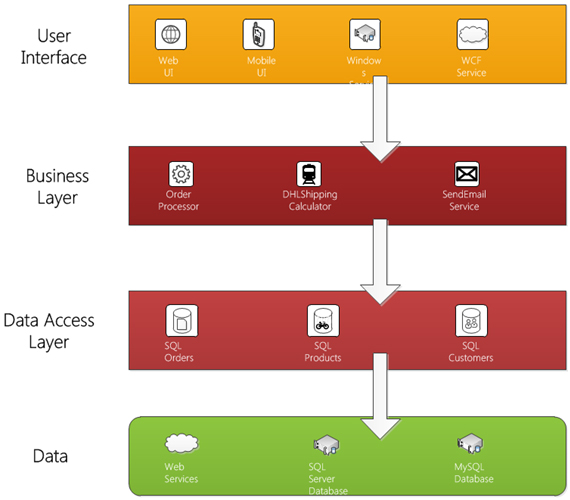 Figure: Bad Example – A solution where each layer depends on static classes is not maintainable or testable
 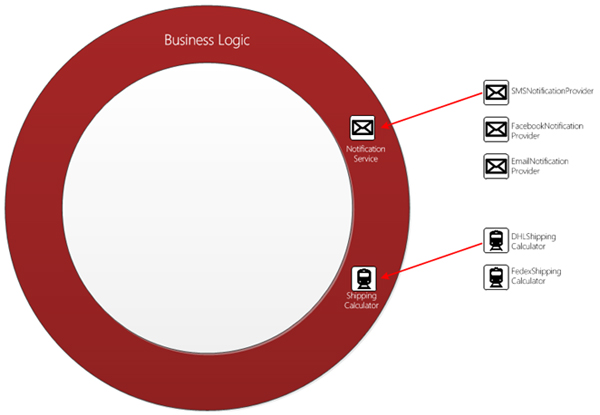 Figure: Good Example – Dependencies in each layer should only be interfaces. This allows dependencies to be easily interchanged and unit tests to be written against mock/fake objects
 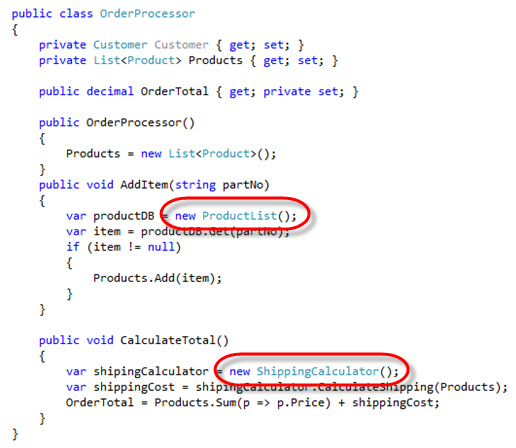 Figure: Bad Example – Classes should not include dependencies on database classes or business objects. Both of these classes may contain dependencies on external services like web services or databases
 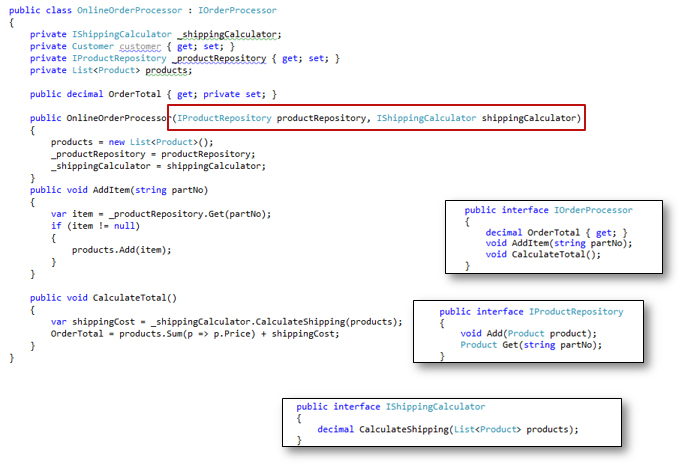 Figure: Good Example – The dependencies are injected into the class. This enables alternative classes to be injected. For example, a DHLShippingCalculator should be easily substituted for a FedexShippingCalculator. A MockShippingCalculator and MockProductRepository could be injected if we wanted to run unit tests