Reporting - Do you monitor your SEO effectively?
Loading last updated info...
SEO means working with a large amount of data. A single website can have even up to thousands of subpages, keywords, and internal links. If it’s operating in a competitive industry, it needs external links from thousands of domains. What if you’re optimizing several websites? The result? The era of Big Data in SEO.
What should be monitored in SEO
- Organic traffic - Non-paid traffic to your website
- Availability (Uptime) - Consistently accessible to users
- Loading speed - Page speed matters for both user experience and search engine rankings
- Correct functioning - Regularly check for any issues affecting the proper functioning of your website
- Domain and SSL certificate expiration - Stay on top of domain and SSL certificate renewals to avoid interruptions
- Blacklist status - Ensure your website isn't listed on any blacklists, which can harm your reputation
- Robot blockers - Check for any factors that might be blocking search engine bots from indexing your content
Example SEO processes (used at SSW)
- The Marketing Manager checks the SEO monthly and analyses trends in keywords, using the tool SEMrush (see below)
- PBIs are created with any necessary changes/investigation
- The Marketing Team works with the Website Team to analyze the SEO progress each month or two when the team catches up
SEMrush
SEMrush connects to Google Analytics and provides an informative and customizable user interface for understanding a website's data. It helps show how a site ranks on Google, what keywords to use, comparisons to competitors and more. Its goal is to help improve online visibility and marketing strategies.
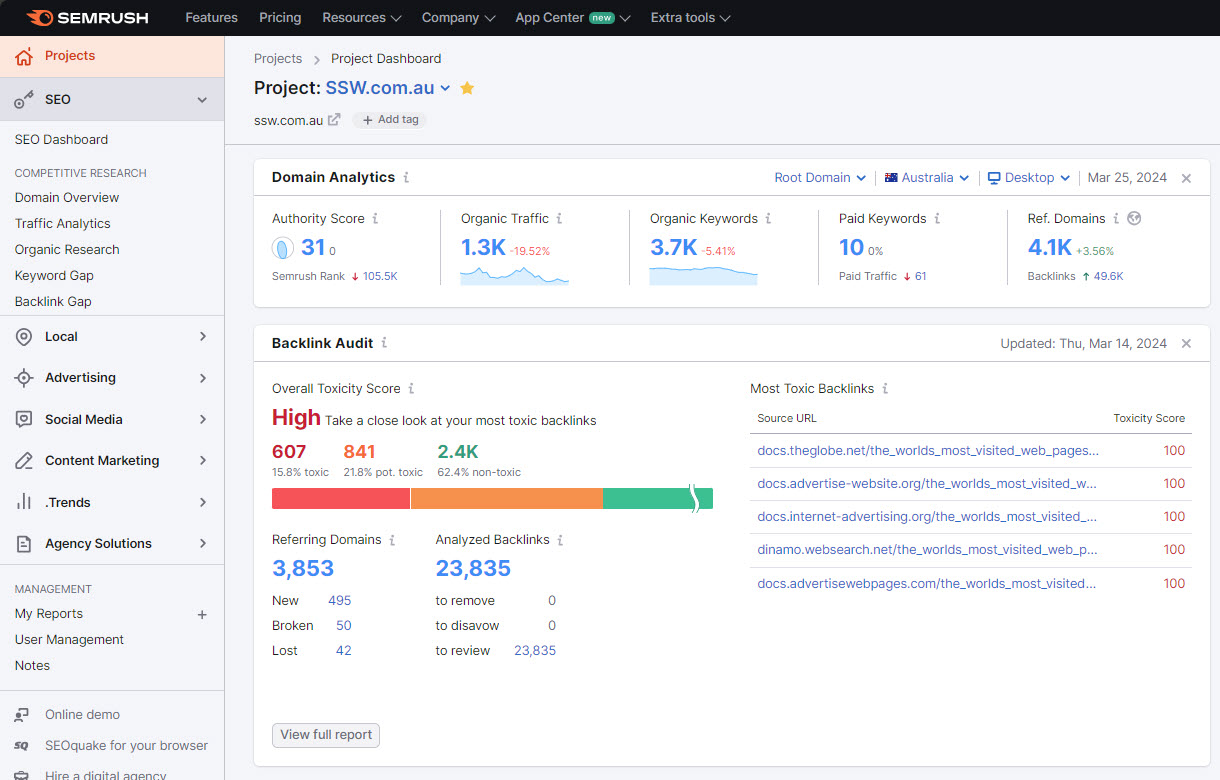
Figure: SEMrush dashboard shows information we can use to improve our website
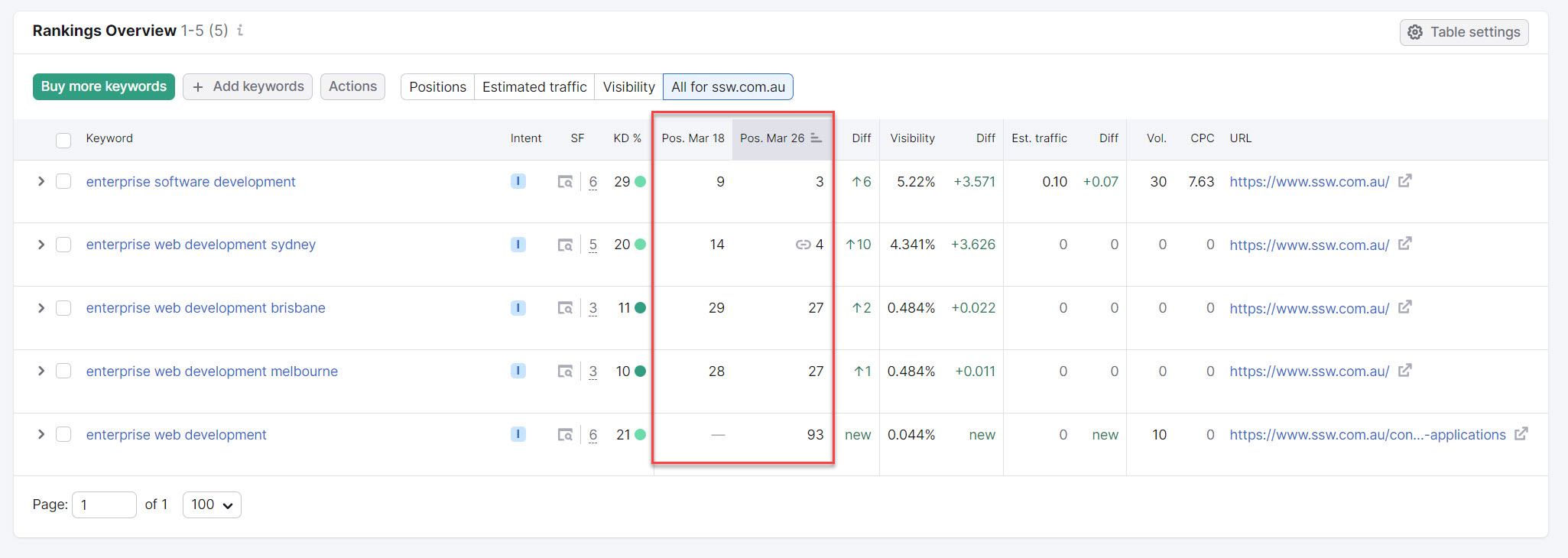
Figure: Easy to understand under what search term our website ranks good/bad